
The honest answer is yes, rafting comes with real risk. The good news is that guided beginner trips are designed to manage that risk with trained guides, proper safety gear, and clear on-river instruction.
White water rafting is one of the most fun ways to experience Colorado. It gives you fast water, big scenery, and the kind of group energy that makes a trip memorable. It also comes with real risk, which is why so many first-time guests still ask the same question: Is white water rafting dangerous?
The Direct Answer Most First-Timers Need
White water rafting is not risk-free. Rivers are dynamic, cold, and powerful. People can fall out, rafts can flip, and swimmers can hit rocks or get tired fast.
Guided beginner trips are built around reducing those risks before you ever push off from shore.
On well-run commercial trips, safety starts with:
- Trip selection by class level
- Guide training and river-specific knowledge
- Properly fitted helmets and PFDs
- A pre-trip safety talk
- Paddle commands that keep the raft under control
- Clear instructions for what to do if you fall in
That is the biggest gap between what nervous beginners imagine and what actually happens on a guided trip. The sport has hazards, but a good outfitter does not treat those hazards casually. Colorado requires river outfitters to be licensed, and all guides must work for a licensed outfitter.
The Risk Changes A Lot By Rapid Class
The fastest way to understand rafting risk is to understand river class.
According to American Whitewater:
- Class II usually fits cautious beginners
- Class III often works for adventurous first-timers with a guide
- Class IV-V is a different category and should not be framed as “just a little more exciting.”
That distinction matters because many fear-based searches lump all rafting together. They should not. A guided beginner trip on the right stretch of river has a different risk profile than advanced whitewater.
What Actually Makes Rafting Dangerous
Strong current
Current is what drives everything on the river. It can push a raft into waves, rocks, and tight lines if the crew stops listening or paddling together. Guides reduce that risk by choosing the line, timing commands, and reading the river ahead.
Falling out of the raft
This is the fear most beginners picture first. It can happen, especially in splashier whitewater, but it is usually manageable when guests know the swim position and listen for commands. Three highlight fundamentals that work because they are simple under stress:
- Grab the raft if you can
- Keep your feet up
- Face downstream until you can safely re-enter or reach shore
Cold water
Even warm summer air does not mean warm river water. Cold water increases stress, fatigue, and the chance of a bad reaction if someone goes in unexpectedly. Proper gear and short exposure times matter.
Rocks and obstacles
Rocks, ledges, and strainers raise consequences when someone leaves the boat or when a raft hits the wrong line. This is one reason guide experience matters so much.
Foot entrapment
This is one of the most serious river hazards. It happens when someone tries to stand in moving water and a foot gets wedged between rocks or debris.
Why Guided Beginner Trips Feel Safer Than People Expect
A good outfitter does not just hand you a paddle and hope for the best.
Colorado Adventure Center’s safety prep content explains that professional guides go through training and certification in river navigation, safety protocols, emergency response, and first aid. Its guide role document also frames guides as river safety officers, with duties that include training, paddle instruction, and guest coaching.
That matters because safety on a rafting trip is not one thing. It is a stack of things working together.
What a guide really does before the first rapid
- Fits helmets and PFDs correctly
- Explains where to sit and how to brace
- Teaches basic paddle commands
- Explains what to do if you fall in
- Sets expectations for teamwork
- Matches the trip to the group’s ability when possible
What a guide really does on the river
- Reads the current and chooses the line
- Adjusts commands in real time
- Controls boat angle and speed
- Watches the swimmer’s risk before it becomes a problem
- Manages calmly under pressure
That is why guided rafting and unguided rafting should never be discussed as if they carry the same level of risk.
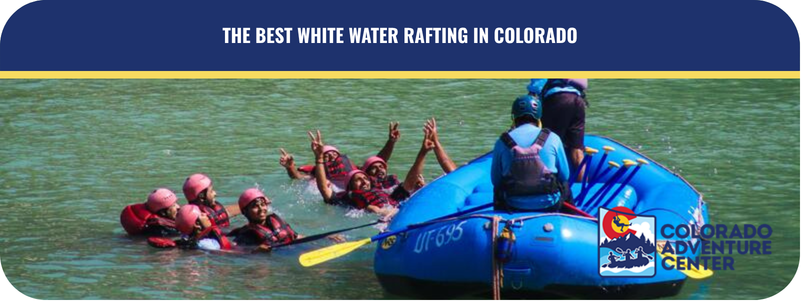
What To Do If You Fall Out
If you fall off a guided trip, the goal is not to panic or start inventing your own plan. The goal is to do the simple things guides teach before launch.
The basics
- Stay calm
- Keep your feet up
- Face downstream
- Try to stay on the raft
- Listen for guide’s instructions
- Do not stand up in moving water
How To Choose A Safer First Trip In Colorado
If your goal is to try rafting without jumping into the deep end, start with the trip choice.
A better first booking usually means:
- Class II or Class III, not IV-V
- A licensed Colorado outfitter
- A trip with a full safety talk
- A company that emphasizes guide training
- A route that is beginner-friendly, not just exciting
If you are still comparing options, start with Colorado rafting trips to understand overall trip types.
FAQ
It can be dangerous, but guided beginner trips are designed to reduce the biggest risks. Class II and many Class III trips are often appropriate for first-timers when the outfitter provides helmets, PFDs, a safety briefing, and a trained guide.
Not necessarily, but you should tell the outfitter before the trip. Commercial rafting guests still wear PFDs, and guides teach what to do if someone falls in. The bigger issues are panic, poor fit of safety gear, and failure to follow instructions.
Class II is the usual comfort zone for cautious beginners, and many guided Class III trips also work well for adventurous first-timers. Classes IV and V are at a different level and should not be treated as beginner rafting.
Stay calm, keep your feet up, face downstream, and try to stay with the raft unless your guide directs otherwise. Do not stand up in moving water because of the risk of foot entrapment.
Yes. Colorado requires river outfitters to be licensed, and all guides must work for a licensed outfitter. Colorado Adventure Center also states that guides undergo training in navigation, safety protocols, emergency response, and first aid.
That depends on the section and water level. Clear Creek includes beginner-friendly options as well as more advanced whitewater, so first-timers should book based on class level, not just the river name. You can compare sections through the company’s Clear Creek rafting trips